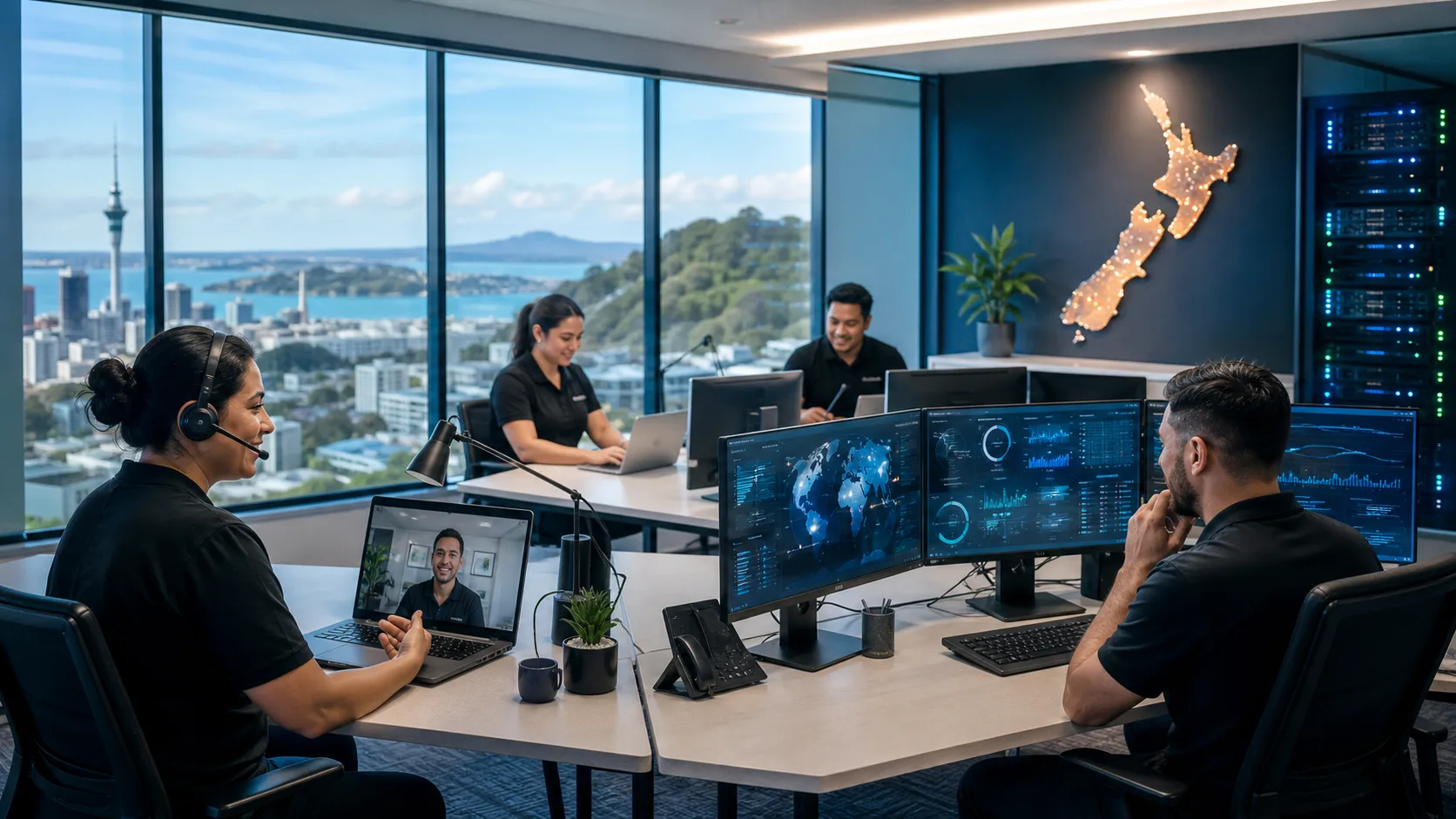
Many New Zealand businesses no longer operate on a simple 9-to-5 schedule. Hybrid work, online services, and customers expecting rapid responses mean issues can arise at any time. When IT support still runs on a traditional office-hours model, the business carries unnecessary risk in the form of downtime, frustrated staff, and delayed customer responses.
A follow-the-sun support model is a straightforward idea: your IT support coverage follows your people and your customers, wherever and whenever they are working. It is not just for global corporates. For organisations with 10 to 250 staff, it can be the difference between a minor disruption and a full day of lost productivity.
Implemented well, this model turns IT support into a strategic advantage. It reduces downtime, keeps projects moving across regions, and gives staff a smoother, less frustrating technology experience. It also adds an extra layer of protection around security, especially in the evenings, on weekends, and across public holidays when attacks are more likely to go unnoticed.
Why NZ SMBs Need True NZ-Wide Managed IT Coverage
Many New Zealand organisations already operate like multi-region teams, even if they do not use that term. Some have branches in Auckland, Wellington, and Christchurch. Others run manufacturing shifts overnight, or professional services teams spread across time zones. Tourism and hospitality providers often operate late into the evening or on extended summer trading hours.
In all of these cases, ad hoc or best-effort IT support reaches its limits quickly. Common pain points include:
- Incidents that start late in the day and sit unresolved overnight
- Tickets that move between people with no clear owner
- A single in-house IT person who becomes a bottleneck or a single point of failure
- Increased risk when that key person goes on leave or is tied up on a project
A structured, NZ-wide managed IT services model gives leaders a single view of systems and a clear set of standards across locations. People log issues in the same way, see the same expectations for response times, and receive consistent answers no matter which office they are in.
This lets you plan with confidence. You know who is watching your infrastructure, what will happen if a core system fails at 7 pm, and how quickly your staff can expect help when something breaks during a busy trading period.
Structuring Tiered Support That Actually Works
Tiered support is simply a way to get the right person on the right problem at the right time. In practical terms:
- Tier 1 handles quick fixes and common issues, such as password resets, printer problems, or a user unable to sign in to Microsoft 365.
- Tier 2 works on deeper problems, such as recurring Microsoft Teams voice issues, network slowness, or integration problems with a line-of-business application.
- Tier 3 focuses on complex architecture and security work, for example, Azure design questions, advanced incident investigation, or major outages.
Without clear rules, tickets can move between tiers or sit with someone who does not have the skills or authority to resolve them. That is when you see delays and extended outages.
A practical, security-focused tiered model should be guided by simple, documented triage rules and playbooks that cover:
- What Tier 1 should resolve immediately versus when they should escalate
- How to classify impact and urgency consistently
- Which systems or alerts always go straight to higher tiers
A security-first, Microsoft-focused approach leans heavily on tools such as Microsoft 365, Azure, Microsoft Defender, and related Microsoft security services across all tiers. With the right configuration, many issues can be prevented or automatically resolved, such as blocking suspicious sign-in attempts or isolating a risky device before it spreads malware. From a user’s perspective, technology simply works more reliably.
Designing Escalations and After-Hours Cover That Protect You
A follow-the-sun model depends on clear escalation paths. When something serious happens, everyone should know exactly what triggers an escalation and who takes over.
Effective escalation design usually includes:
- Time-Based Triggers, for example, automatic escalation if an incident is not progressing within an agreed timeframe.
- Severity Levels, for instance, a payroll system outage or major file share failure is treated as critical, while a single-user issue is important but less urgent.
- Clear Ownership, defined responsibilities at every stage, including what happens when an incident spans a shift change or crosses regions.
After-hours coverage does not need to mean every ticket is worked on at midnight. Many SMBs achieve the right balance with a mix of:
- On-call incident response for high-severity issues
- Clearly defined “critical-only” support windows outside core hours
- Planned maintenance windows in the evenings or weekends to reduce impact on staff and spread work across quieter times
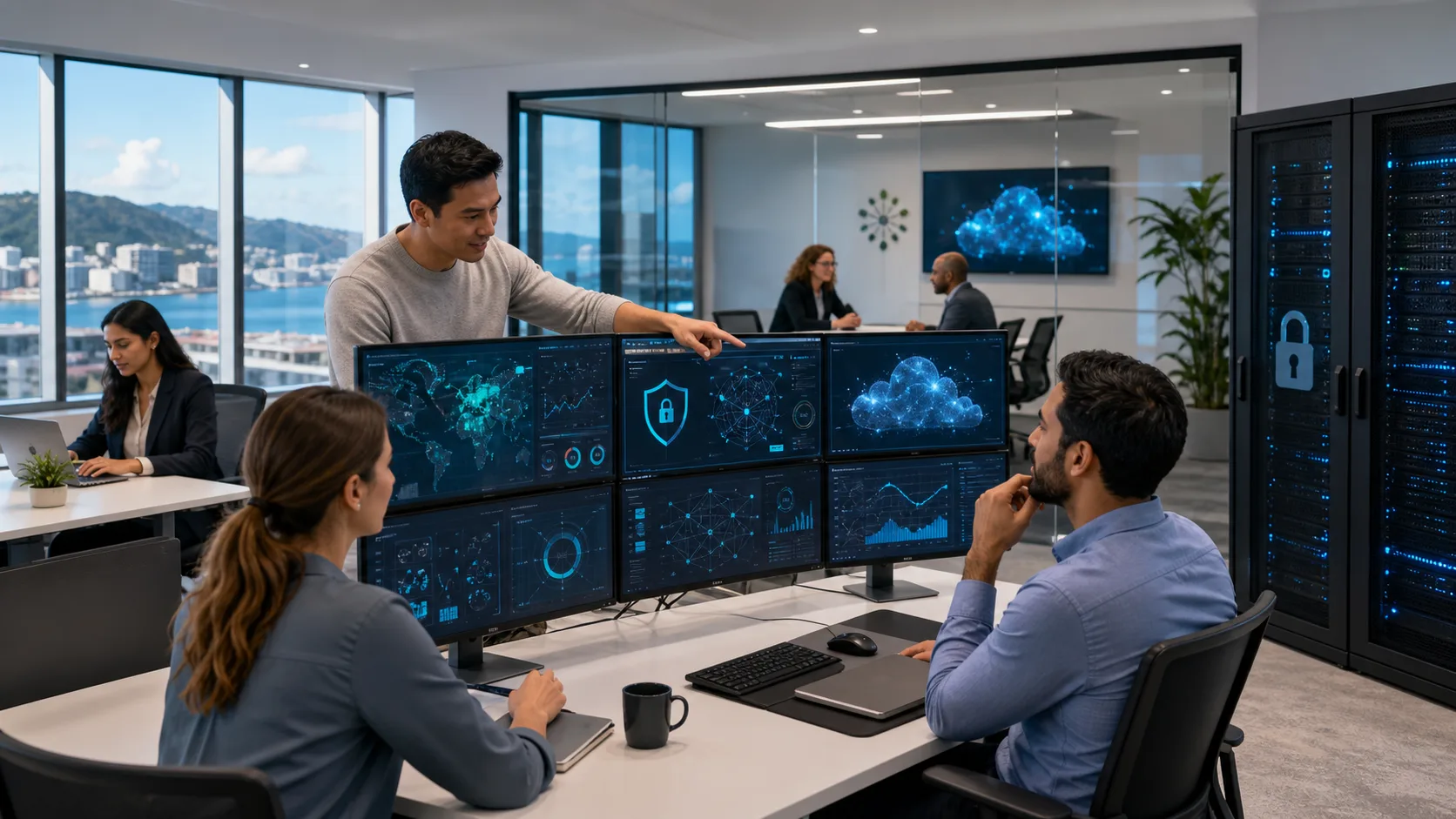
Security is one of the biggest benefits of this approach. Attackers know that many organisations have weaker coverage outside business hours. With continuous monitoring across Microsoft 365, Azure, endpoints, and cloud workloads, suspicious activity can be identified and acted on quickly. That might mean locking down a compromised account, blocking a suspicious sign-in from overseas, or containing an infected device before staff return on Monday morning.
Using Managed IT Services in NZ for Multi-Region Teams
As multi-region and hybrid teams grow, the basics of reliable access and security matter more. Staff need to know that, whether they are in an office, on the road, or working from home, they have consistent and secure access to tools like Microsoft 365 and their line-of-business applications.
A well-designed model for managed IT services in NZ will typically focus on:
- Reliable access to email, Microsoft Teams, and shared documents from any region
- Secure remote access for staff who are mobile or working offsite
- Stable connectivity between branch offices and cloud services
- Clear joiner, mover, and leaver processes so access is always appropriate and up to date
Common real-world scenarios include:
- A professional services firm with project teams split between Auckland and Dunedin needing shared project workspaces and reliable video meetings.
- A regional health provider or not-for-profit with staff on the road accessing sensitive data securely from laptops and mobile devices.
- A construction company requiring secure access to plans and project data from temporary site offices and remote locations.
Across all of these examples, alignment matters. SLAs, ticket priorities, and communication rules should be understood by every team. That reduces friction between offices, avoids confusion about who to contact after hours, and helps managers keep service levels steady when staffing patterns shift over busy summer and holiday periods.
Building a Follow-the-Sun Model with Predictable Costs
Many leaders are concerned that extended IT coverage will simply add cost. However, the hidden side is the cost of downtime, overtime for internal staff trying to fix issues overnight, and lost productivity when systems fail at critical times.
A structured follow-the-sun service, delivered as managed IT services in NZ, replaces these surprises with predictability. You can choose the level of coverage that matches your actual risk, sector expectations, and operating pattern. For example:
- Retail or hospitality businesses may care more about evenings and weekends.
- Professional services firms may prioritise early mornings and end-of-project deadlines.
Right-sized support design usually covers:
- Agreed response times for different priority levels
- Defined after-hours rules that match how and when you trade
- A clear scope of what is monitored, and which alerts trigger action
Regular reporting then keeps the model honest. Reviews of incident trends, security posture, and user experience make it easier to see where things are working and where coverage needs to shift. Over time, this helps tighten risk, reduce noise, and keep IT aligned with business goals rather than running as a separate technical function.
Actionable Steps for NZ SMBs Considering 24/7 IT Support
For New Zealand organisations looking to move toward a follow-the-sun model, practical next steps include:
- Assess Your Operating Hours and Risk Profile, map when staff are working, when customers are most active, and which systems are most critical.
- Identify Current Support Gaps, review incidents that occurred outside core hours and measure their impact on productivity and customer experience.
- Clarify Roles and Escalation Paths, define who is responsible for what, how incidents are prioritised, and how handovers work between regions or shifts.
- Align Tools and Platforms, standardise on a security-first, Microsoft-focused stack (e.g. Microsoft 365, Azure, Microsoft Defender) to simplify management and improve visibility.
- Engage a Trusted Managed Service Provider, partner with an MSP that understands NZ SMB environments, can provide NZ-wide coverage, and can design a tiered, follow-the-sun model based on your business outcomes and budget.
Conclusion: Turning Support Into a Strategic Business Asset
A security-first, NZ-wide follow-the-sun model transforms IT support from a basic helpdesk into a core part of your operating strategy. For New Zealand organisations with 10 to 250 staff, the benefits include:
- Reduced downtime and fewer disruptions during critical trading periods
- Stronger cyber resilience, including after-hours monitoring and rapid response
- Smoother collaboration across multi-region and hybrid teams
- More predictable IT costs aligned to real business risk and sector expectations
By approaching 24/7 IT support as a strategic capability, and leveraging a Microsoft-focused managed service provider, NZ SMBs can improve productivity, reduce risk, and stay competitive in an always-on business environment.
Secure Your Business With Reliable IT Support Today
If you are ready to reduce downtime and get proactive support for your systems, we are here to help. At CorIT Tech, our managed IT services in NZ are designed to keep your technology running smoothly so you can focus on your core work. Tell us about your current challenges and we will tailor a solution that fits your organisation. To discuss your needs or request a quote, simply contact us today.