Smarter IT Choices for New Zealand Growth Ambitions
Growing firms in New Zealand often hit the same IT wall. The business is winning more work, hiring more people, and relying heavily on cloud tools and remote access, but the IT setup still looks like it did when there were ten staff sharing one office. Things work most days, but issues are starting to pile up.
At this stage, ad hoc IT decisions can quietly create big problems. Unplanned outages, cyber scares, and messy systems do not just frustrate staff; they slow down growth and make it harder for leaders to plan with confidence. This article looks at how to make smarter, staged decisions about IT services in New Zealand so the technology side supports growth instead of getting in the way.
We are writing from our experience at CorIT Tech as a local technology partner working with organisations of around 10 to 250 staff across sectors like professional services, construction, healthcare, and non-profits. Our focus is simple: reduce risk, improve productivity, and give clear guidance so leaders can get back to running the business.
Recognising When Your IT Model No Longer Fits
As organisations grow, the IT setup that worked in the early days starts to strain. Common triggers include headcount jumping from around 10 to 30 or more, adding new branches or project sites across different regions, hybrid work becoming normal rather than a special case, and winning bigger customers who expect stronger security and compliance.
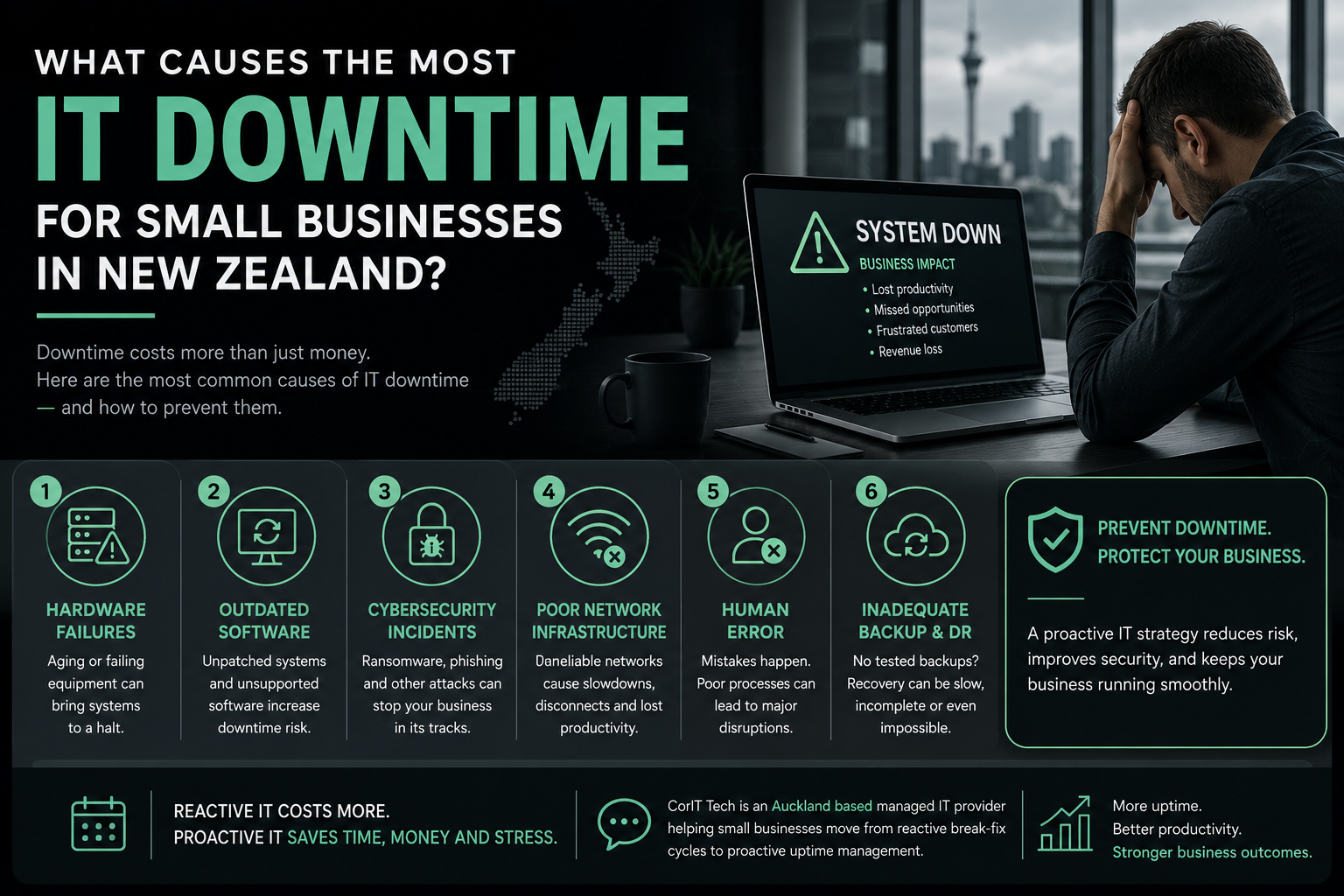
When that happens, the old model of “someone internal who is good with computers plus a local tech on call” often starts to creak. Warning signs include recurring outages or slow systems that keep coming back, long wait times for support, problems being fixed only temporarily, staff bypassing processes or using personal tools, and audits or clients raising concerns about data protection and access controls.
The business impact is real. Poorly aligned IT services push up risk, for example through ransomware or data loss. Productivity slips as people work around slow systems or patchy remote access. Growth opportunities are delayed because new cloud tools are too hard to roll out on top of messy foundations.
We see this in everyday New Zealand scenarios. An engineering firm based around Christchurch may struggle to support remote project teams on different sites, with drawings scattered across laptops and slow access to shared files. An accounting practice in Auckland might find that compliance demands for secure document sharing outgrow the simple tools and manual checks used in earlier years. In both cases, the tipping point is not about size alone; it is about the mix of risk, complexity, and client expectation.
Choosing the Right IT Service Model for Your Stage
Once you recognise the strain, the next step is choosing an IT service model that fits where you are now and where you are heading. Most growing organisations in New Zealand end up working with some combination of internal IT staff, ad hoc contractors called when something breaks, fully managed IT services, or co-managed IT where internal staff work alongside a managed service provider.
From a business leader’s view, the trade-offs usually come down to cost predictability, speed of response, depth of expertise, and scalability. You need to understand whether spend is steady and planned or spiky and reactive, how quickly issues affecting staff or clients get fixed, whether you can access specialist help on security, cloud, and strategy, and whether support and systems can keep up as you add people, sites, and tools.
For many organisations with around 10 to 30 staff, this is the point to move beyond ad hoc support to basic managed IT and cloud services so there is clear ownership of support, maintenance, and security basics. Between roughly 30 and 100 staff, structured support, security monitoring, and standardisation across sites become important. Leaders at this stage need clear reporting and service levels rather than relying on best efforts. From about 100 to 250 staff, co-managed IT often makes sense, with an internal team handling local knowledge and daily activity, supported by a partner that brings broader expertise and advanced security services.
Whatever model you choose, it helps to be very clear about service levels, such as response times, hours of cover, and what is in or out of scope. Security responsibilities should be defined so there are no gaps between internal staff and providers. Regular review points also matter, where you check what is working, what is not, and what needs to change as the business grows. Without this clarity, even a strong IT model can turn into a constraint over time.
Building Cybersecurity and Resilience into Everyday Operations
Growing firms are increasingly targeted in New Zealand because they often sit in the supply chain of larger organisations and hold valuable data. Common risks include email fraud against finance teams, targeted malware against professional services and healthcare, and attempts to use weak remote access to get into internal systems.
To keep this practical, it helps to talk about outcomes instead of technical buzzwords. A sound approach to cybersecurity protects cash flow by stopping fake invoice and payment fraud, helps avoid long operational shutdowns from ransomware or server failure, and supports client and regulatory expectations for how data is stored and accessed.
Key building blocks usually include strong identity and access management, such as multi-factor authentication for staff and role-based access so people only see what they need. A secure cloud and backup strategy is also essential, with tested recovery processes, geo-resilient backups, and email protection that filters threats before they reach users. Finally, user awareness and process controls are crucial, including finance approval rules, regular phishing awareness sessions, and a simple incident response plan that people actually understand.
A well-structured managed security service can make the difference between a short disruption and a full crisis. When monitoring, backups, and playbooks are in place, a malware incident may be spotted early, contained, and cleaned up with limited downtime. Without those things, the same event can turn into extended outages, lost data, and rushed decisions made under pressure.
Using Cloud and AI Wisely to Drive Productivity
Cloud platforms and AI tools can be powerful for New Zealand firms with multiple sites, field staff, or flexible work patterns. The goal is not to chase trends, but to remove friction from how people work.
Modern cloud tools can support shared document workspaces that keep one source of truth for files, secure file access for field staff on tablets or phones, and integrated communication tools so chat, meetings, and documents sit together. For example, a regional construction firm might standardise site reporting through a cloud platform so project photos, notes, and safety checks are logged in the same place in near real time. A Wellington consultancy might rely on shared workspaces so project teams can work flexibly from home and client offices without losing control of data.
AI, used sensibly, can reduce manual administration, such as sorting emails or summarising meeting notes. It can improve customer response times by suggesting replies or routing requests, and surface insights from existing data, such as trends in support tickets, sales patterns, or project risk indicators.
The key is governance. Tools need to be configured so data is protected, staff know what is allowed, and changes do not disrupt daily work. Local expertise helps here, because privacy expectations, business culture, and day-to-day operations in New Zealand are specific, and off-the-shelf setups often miss those details.
Planning Your Next IT Step Before the New Financial Year
For many New Zealand organisations, the lead-up to a new financial year is when budgets and priorities are reviewed. That is a natural time to step back and look at whether your current IT model still matches where the business is heading.
A practical action plan is to:
- Map your current business priorities and risks, such as key growth areas, compliance pressures, and any recent near-misses or IT incidents.
- Assess whether your current IT model and providers actually support those priorities, including response times, security posture, and the ability to support hybrid work.
- Identify three to five improvements for the next 12 months, such as strengthening backups, standardising devices, improving security monitoring, or formalising support arrangements.
Turning IT into a Growth Enabler
At CorIT Tech, based in New Zealand, we focus on helping small and medium-sized organisations work through these questions with an IT health check and a clear, right-sized approach to managed IT, cloud, security, and AI advisory. The aim is not to overhaul everything at once; it is to make smart, staged decisions so your technology quietly supports sustainable, secure growth.
By aligning your IT service model with your growth stage, building cybersecurity and resilience into everyday operations, and using cloud and AI with strong governance, you can reduce risk, improve productivity, and gain predictable IT costs. That foundation allows your leadership team to keep its attention on customers, staff, and strategy, confident that technology is supporting the next phase of growth rather than holding it back.
Get Started With Your Project Today
If you are ready to modernise your systems or resolve ongoing IT challenges, we are here to help you plan the next steps with clarity and confidence. Explore our full range of IT services in New Zealand to see how CorIT Tech can support your organisation’s goals. For tailored guidance or to discuss a specific project, simply contact us and we will get back to you promptly with expert recommendations.